 how-to
Book a Home Sale Consultation: What to Expect
Table of Contents
- Why a Home Sale Consultation Is the First Step
- What Happens During a Listing Consultation
- Questions to Ask a Realtor Before Selling
- Your Real Estate Listing Consultation Checklist
- How Long Does a Real Estate Agent Consultation Take?
- Virtual vs. In-Person: Which Consultation Format Works for You
- Conclusion
- Frequently Asked Questions
Last Updated: October 2, 2026
Why a Home Sale Consultation Is the First Step
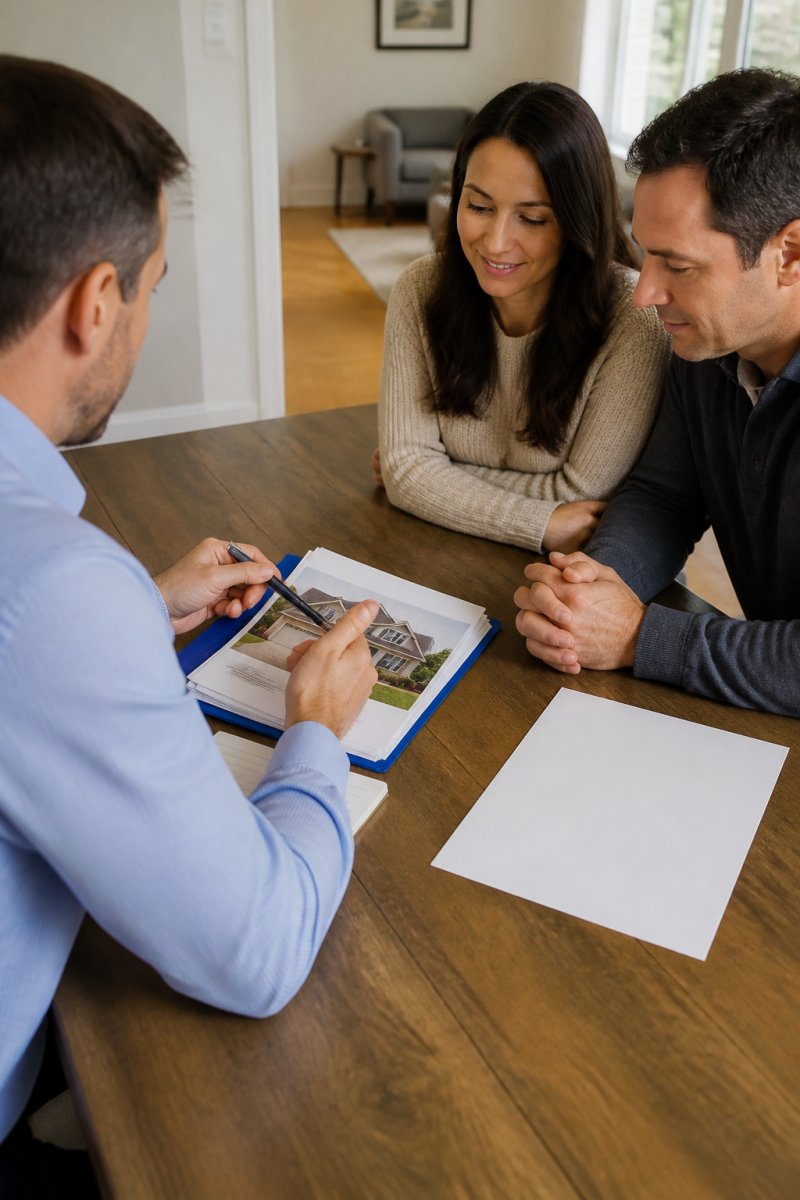
A home sale consultation is a no-obligation meeting where a real estate professional walks your property, reviews your goals, and builds a pricing and marketing plan before you commit to anything. It is the single most important appointment in the selling process, because every decision after it, from list price to repair budget, flows from what you learn there.
At Rodney Davis - No-Nonsense Realtor, we treat that first meeting as a working session, not a sales pitch. You should walk out knowing your likely price range, your timeline, and the three or four things worth fixing before photos.
Most sellers who skip this step end up guessing on price. Guessing is expensive. Consumer Financial Protection Bureau home selling resources notes that sellers who understand their local market position before listing make more informed decisions about pricing and negotiation.
Here is what most guides get wrong: they describe the consultation as a formality you do after you decide to sell. In practice, it is how you decide whether selling now makes sense at all.
What Happens During a Listing Consultation
A listing consultation follows a predictable structure: introductions and goal setting, a walk-through and property assessment, a pricing presentation built on a comparative market analysis, and a review of the listing agreement and marketing plan.
Expect it to feel like a conversation with a consultant, not a pitch. A good agent asks more questions than they answer in the first fifteen minutes.
The Walk-Through and Property Assessment
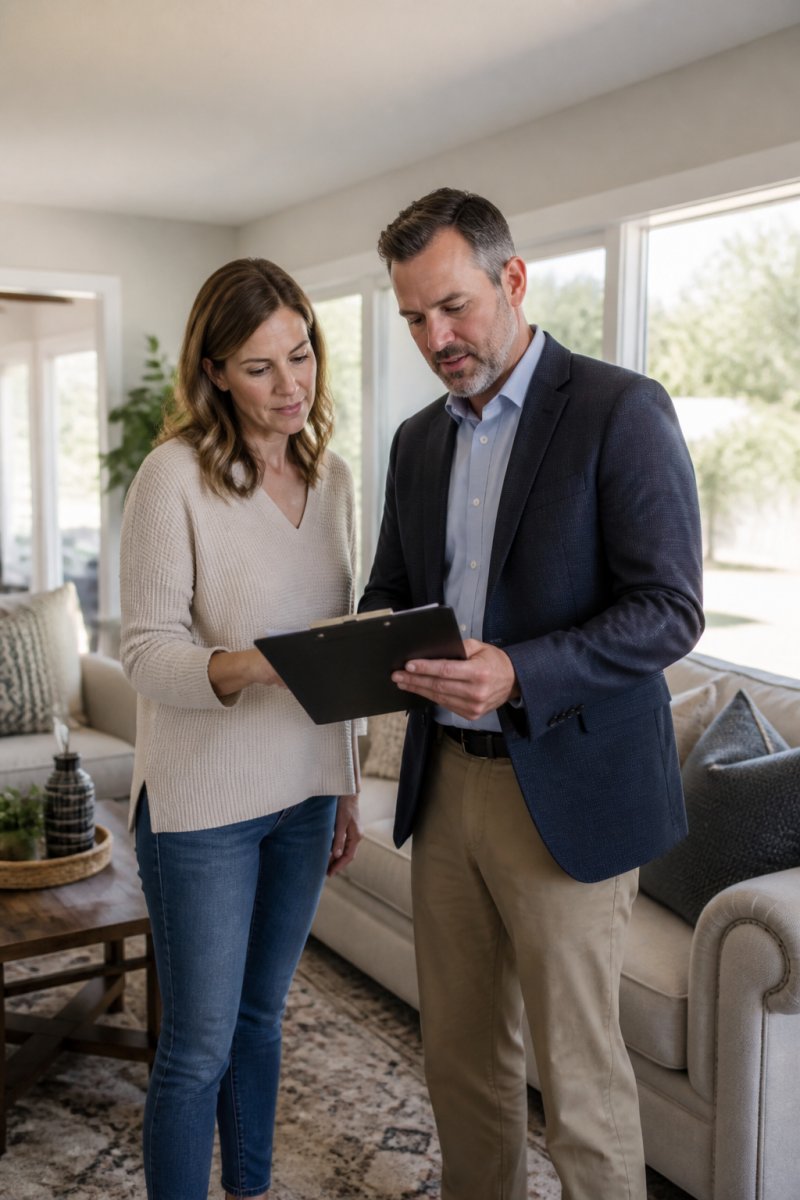
The walk-through is where an agent assesses condition, layout, and updates room by room. Bring your repair receipts and any permit records you have, because documented upgrades change the pricing conversation.
A common mistake is tidying up and calling it preparation. Agents are looking past the clutter at the things that actually affect value: roof age, HVAC condition, foundation cracks, water stains, outdated electrical panels, and the flow between rooms. In practice, this means your assessment should focus on what a buyer's inspector will eventually flag.
Pricing Strategy and Market Analysis
Pricing strategy rests on a comparative market analysis, which compares your home to recently sold, currently listed, and expired properties nearby. Your agent should show you the comps, not just hand you a number.
Here is the mechanism most sellers never see. A CMA is not a simple average of nearby sales. Your agent takes each comparable sale and adjusts it line by line toward your home: adding value for a feature yours has that the comp lacks (a finished basement, a third garage bay, a newer roof) and subtracting for what yours lacks (no central air, an older kitchen, a smaller lot). The adjusted values cluster into a range, and that range, not any single number, is your realistic list price band.
What most sellers miss is the difference between sold comps and active listings. Active listings tell you what your competition is asking. Sold comps tell you what buyers actually paid. The second number matters more.
Ask for the absorption rate too. Absorption rate is the number of months it would take to sell the current inventory at the current pace of sales. Divide the number of active listings in your area by the number of homes that sold in the last month. If your neighborhood has six months of inventory, you are pricing into a buyer's market, and your strategy changes accordingly. Under about four months, you are in seller's territory and can hold firmer on price. Over six, overpricing by even a few percent can leave your home sitting while fresher listings undercut you.
Watch for these pricing traps:
- Anchoring to your neighbor's list price. Their asking price is not evidence of value. Only closed sales are.
- Pricing to leave room to negotiate. In a slow market, buyers skip overpriced homes entirely rather than make a low offer, so the strategy backfires.
- Ignoring expired listings. Homes that failed to sell are the clearest signal of where the ceiling is.
- Rounding up to a "pretty" number. Precise pricing can place your home in more buyer search filters than a round number just above a common cutoff.
A useful exercise during the consultation: ask your agent to walk you through one comp in full, adjustment by adjustment. If they can explain why that home sold for what it did and how yours differs, you are working with someone who prices from evidence. If they cannot, you are working with someone who prices from instinct.
Questions to Ask a Realtor Before Selling
The questions to ask a realtor before selling should cover pricing evidence, marketing spend, communication cadence, and exit terms. Ask them in the consultation, before you sign anything.
Bring these five:
- How did you arrive at this price, and can I see the comps?
- What specific marketing will you run, and where will it appear?
- How often will you update me, and through what channel?
- What happens if the home does not sell in 30 days?
- Can I see your listing agreement before I commit?
That last one matters more than most sellers realize. The listing agreement spells out the commission structure, the contract length, and the cancellation terms. Read it at the table, not in your car afterward.
If you are relocating and cannot attend in person, ask how the agent handles remote walk-throughs and document signing. It is a fair question, and the answer tells you a lot about how organized they are.
The Two Questions Most Sellers Forget to Ask
Most guides stop at the transaction. Two questions go deeper, and they are the ones that separate a smooth sale from a stressful one.
"What would you do if this were your own home, and you were not in a hurry?" This question surfaces the improvements an agent actually believes in rather than the ones that pad a to-do list.
Write your questions down before the meeting. The pricing conversation moves quickly, and the questions you meant to ask are the ones that slip away.
Your Real Estate Listing Consultation Checklist
The real estate listing consultation checklist is short but it saves you a second appointment: documents, questions, and a rough number for what you owe on the mortgage.
Bring:
- Photo ID
- Most recent mortgage statement
- Property tax bill
- Recent utility bills
- Receipts for major repairs or renovations
- Any survey, plat, or HOA documents
- A list of what stays and what goes with the house
- Your target timeline and bottom-line number
How Long Does a Real Estate Agent Consultation Take?
A real estate agent consultation duration typically runs 60 to 90 minutes: about 30 minutes for the walk-through, 20 to 30 minutes on pricing and market analysis, and the rest on paperwork and questions.
Virtual vs. In-Person: Which Consultation Format Works for You
In-person consultations work best when you can be at the property, and virtual consultations work best when you cannot. Neither is universally better, but they produce different quality of information.
Choose in-person if:
- You want an accurate condition assessment
- The home has deferred maintenance you are unsure about
- You are interviewing multiple agents and want to compare their read on the property
Choose virtual if:
- You are relocating for work and cannot travel yet
- The property is a rental or currently occupied
- You want a preliminary price range before committing to a full appointment
Conclusion
The hardest part of selling is not the paperwork or the showings. It is committing to a price and a timeline without knowing whether either is realistic. A consultation removes that guesswork before it costs you anything.
Frequently Asked Questions
What happens during a home sale consultation?
A home sale consultation covers four main areas: a walk-through of your property, a comparative market analysis, a pricing discussion, and a review of your goals and timeline. The agent assesses your home's condition, reviews recent sales of similar properties in your area, and recommends a listing price. You'll also discuss staging, repairs, and marketing strategy. Expect the agent to ask about your closing timeline and any upgrades you've made so they can position your home accurately.
What should I have ready for my real estate listing consultation checklist?
A solid real estate listing consultation checklist includes: your property deed or title, recent mortgage statement, property tax records, a list of upgrades and repairs with dates, utility bills from the past year, and any HOA documents if applicable. Having these ready speeds up the process and gives the agent accurate data for pricing. Also prepare a list of questions about commission structure, disclosure requirements, and the closing timeline.
How long does a real estate agent consultation take?
Most real estate agent consultations last between 45 and 90 minutes. The duration depends on property size, whether it's virtual or in-person, and how many questions you have. A standard single-family home walk-through takes about 30 minutes, leaving time for pricing discussion and goal setting. Virtual consultations often run shorter at 30 to 45 minutes. If you have commercial property or land, expect closer to 90 minutes.
Does a home sale consultation cost money?
No. A home sale consultation is typically free and comes with no obligation. The agent provides a property valuation, market analysis, and selling strategy at no cost. You decide whether to list with them after the meeting. If you choose not to sell, you owe nothing. This is standard practice because the consultation serves as both a service to you and an opportunity for the agent to earn your business.
Can a consultation help me identify necessary home repairs?
Yes. During the walk-through, the agent will point out repairs or upgrades that could affect your listing price or slow down a sale. Common items include roof condition, HVAC age, exterior paint, and curb appeal issues. The agent can also recommend which improvements offer the best return on investment. You'll get a clear picture of what to fix before listing and what to leave alone.