 how-to
Buy a Home Remotely in Hobbs: Step-by-Step Guide
Table of Contents
- Step 1: Get Pre-Approved and Prove Your Funds
- Step 2: Use Virtual Home Tours to Search Properties
- Step 3: Hire a Buyer's Agent in Hobbs
- Step 4: Conduct Remote Due Diligence and Inspections
- Step 5: Make an Offer and Negotiate Terms
- Step 6: Complete the Remote Real Estate Closing Process
- Common Mistakes When You Buy a Home Remotely
- Conclusion
- Frequently Asked Questions
Last Updated: October 4, 2026
Step 1: Get Pre-Approved and Prove Your Funds
Getting pre-approved is your first real step when you buy home remotely. Lenders verify your financial situation before you can make competitive offers, typically within 3-5 business days using tax returns, pay stubs, bank statements, and employment verification.
Proof of funds is critical when buying remotely. A pre-approval letter removes seller doubts about an out-of-state buyer's ability to close.
Work with a lender early, before searching. Having your pre-approval in hand before making offers strengthens your negotiating position and shows sellers you're serious.
Keep financial documentation organized in a digital folder. Most lenders reverify funds before closing, so maintain access throughout the process.
Step 2: Use Virtual Home Tours to Search Properties
Virtual walkthroughs have fundamentally changed remote property search. Most MLS listings now include virtual tours, 3D walkthroughs, or video links you can access on your own schedule.
Filter properties on live MLS listings and demand comprehensive photo galleries and video tours. Skip listings with inadequate visuals.
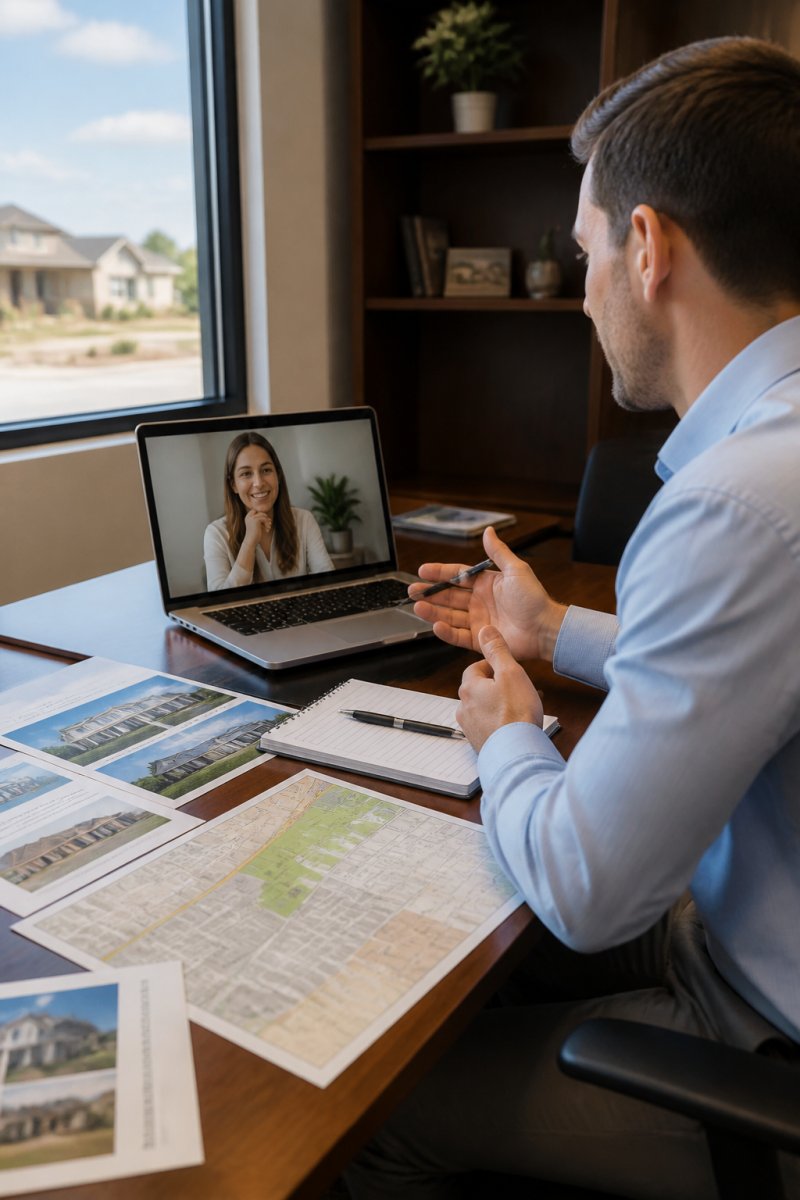
Schedule video calls with your agent to walk through properties. A local professional can highlight details you might miss, answer neighborhood questions, and assess whether a property warrants further pursuit.
Note property condition markers in videos: water stains, foundation cracks, roof condition, and flooring. Create a spreadsheet ranking top candidates by location, price, and condition.
Step 3: Hire a Buyer's Agent in Hobbs
Hiring a local buyer's agent is essential when you buy a home remotely. Your agent attends inspections, verifies conditions, negotiates on your behalf, and handles local logistics.
Interview agents about their specific experience with remote closings and ask for references from previous remote buyers.
Your agent should have deep knowledge of Hobbs neighborhoods, market conditions, zoning regulations, property taxes, and local utilities.
Compensation for buyer's agents typically comes from the seller's side of the transaction, so working with an agent shouldn't cost you additional out-of-pocket fees. Clarify this upfront to avoid confusion.
Step 4: Conduct Remote Due Diligence and Inspections
Due diligence for remote buyers requires systematic planning and information gathering through professional channels that substitute for physical presence.
Professional Home Inspection with Video Documentation
Schedule a licensed home inspector and request video walkthrough footage including foundation, roof, HVAC, plumbing, electrical, and finishes. Follow up by phone to discuss findings and repair costs.
Request a written inspection report with timestamped photos and measurements for documentation and potential repair negotiations.
Verifying Property Condition Without Physical Presence
Have your agent conduct a detailed walkthrough with a checklist covering water stains, foundation cracks, roof condition, HVAC age, plumbing/electrical updates, appliances, and pest/mold evidence. Request photos and written notes.
Request utility records to understand historical usage patterns. High water or electric bills may indicate leaks or inefficiency issues.
Have your agent test all systems during a final walkthrough: furnace, AC, water heater, appliances, doors, and windows. Document issues in writing.
Assessing Neighborhood Safety and Livability Remotely
Use targeted research methods to assess neighborhood safety and livability:
Check FBI Uniform Crime Reporting data and local law enforcement websites. Review crime trends over 3-5 years, not just current snapshots.
Join local social media groups and ask residents about safety, noise, flooding, and quality of life. Ask about break-ins, traffic noise, street flooding, and nearby property conditions.
Research school quality via GreatSchools.org, property tax rates, and zoning regulations through the local planning department.
Use Google Street View for baseline neighborhood appearance and ask your agent for current photos of the street and nearby homes.
Title and Legal Due Diligence
Request a preliminary title report before making an offer. Ask the title company to explain any liens, easements, covenants, or restrictions in plain language.
Search public records for previous sales prices, ownership changes, code violations, and insurance claims. Look for patterns indicating problems.
Verify the seller's ownership and confirm there are no pending lawsuits, tax liens, or HOA disputes.
Survey and Boundary Verification
For rural properties or unusual shapes, request a professional survey to document exact boundaries and prevent costly disputes.
Step 5: Make an Offer and Negotiate Terms
Making an offer remotely follows the same fundamentals as in-person offers. Your agent prepares the purchase agreement for digital signing.
Price your offer competitively using comparable sales data. Include standard contingencies: inspection, appraisal, and financing.
Expect seller counteroffers. Your agent handles negotiations on your behalf.
Specify a closing date allowing adequate time for inspections, appraisal, and document review. Most closings take 30-45 days; build in buffer time.
Step 6: Complete the Remote Real Estate Closing Process
Remote closings are legally binding and increasingly standard in New Mexico, though mechanics differ from in-person transactions.
New Mexico Remote Closing Legal Framework
New Mexico permits remote closings through electronic notarization.
Confirm your title company and lender accept remote notarization. Ask upfront whether they require in-person closing.
New Mexico is a community property state. Both spouses typically must appear and sign closing documents. Verify this with your title company early.
Escrow and Title Insurance in New Mexico
The title company holds funds in escrow until documents are recorded.
New Mexico requires title insurance. Lenders require a lender's policy; you should also purchase an owner's policy covering you indefinitely against title defects.
Title insurance protects against ownership claims, liens, and seller authority issues, not physical defects. Ask your title company what it covers and excludes.
Request a preliminary title report one week before closing. Ask the title company to explain any liens, easements, or restrictions.
The Closing Disclosure and Final Review
You'll receive the Closing Disclosure at least three business days before closing, outlining final loan terms, rates, payments, costs, and cash due. Review it carefully.
Compare the Closing Disclosure against your Loan Estimate. Flag discrepancies immediately and contact your lender for written explanations.
Confirm exact cash due at closing (down payment, costs, prorated taxes/HOA fees) and wire instructions.
The Remote Closing Appointment
On closing day, you'll sign documents electronically via remote notary. The notary verifies your identity, explains documents, and witnesses your signature, typically 1-2 hours.
Gather your government-issued ID, ensure a quiet space with good lighting and internet, and review documents carefully before signing.
You'll sign the promissory note, mortgage or deed of trust, closing statement, and federal disclosures.
After you sign, the title company collects other signatures, the lender funds the loan, and the deed is recorded with the county clerk.
Recording and Ownership Transfer
Recording makes you the legal owner. The county clerk records the deed within 1-3 business days of closing.
Once recorded, you own the property. Keep the recorded deed and title insurance policy in a safe place.
Confirm key delivery method with your agent before closing day.
Post-Closing Steps
After closing, confirm homeowners insurance is active, update your address with the post office and utilities, and contact the HOA if applicable.
Request a final walkthrough of the property after closing to confirm the seller has vacated and the property is in the condition you agreed to.
Common Mistakes When You Buy a Home Remotely
First-time remote buyers often skip the professional home inspection to save money. This is a serious mistake. An inspection costs a few hundred dollars and can save you tens of thousands in unexpected repairs. Never waive this contingency.
Another common error is trusting video tours alone. Videos can hide problems, poor lighting obscures foundation issues, angles can make small rooms look larger, and quick pans miss important details. Combine video tours with professional inspections and your agent's on-site assessment.
Remote buyers sometimes underestimate closing costs and surprise themselves at the final numbers. Closing costs typically range from 2-5% of the purchase price and include appraisal fees, title insurance, lender fees, and property taxes. Ask your lender for a detailed estimate upfront and budget accordingly.
Choosing an agent based solely on online reviews is risky. Interview multiple agents, ask about their specific experience with remote transactions, and verify their local market knowledge. The cheapest agent isn't always the best choice.
Failing to research local regulations and utilities is another pitfall. Different areas have different rules about septic systems, well water, property maintenance, and zoning. Understand these requirements before you buy, not after.
Conclusion
When you buy home remotely in Hobbs, it's entirely feasible if you approach it strategically. The process requires more documentation and careful planning than in-person buying, but technology has made remote transactions secure and straightforward. Getting pre-approved early, using virtual tours effectively, hiring a knowledgeable local agent, conducting thorough due diligence, and understanding the digital closing process all work together to protect your investment.
At Rodney Davis - No-Nonsense Realtor, we've guided remote buyers through this exact process across Lea County. We provide live MLS listings refreshed multiple times per day, professional home valuations delivered in 24-48 hours, and customizable search alerts for properties matching your criteria. Our comprehensive 8-step buying process walks you through each step, helping you avoid common buyer mistakes that cost thousands and close with confidence. Send me a message to discuss your remote home purchase and get started with a straightforward, transparent approach to buying in Hobbs.
Frequently Asked Questions
Can I buy a house in Hobbs without visiting in person?
Yes, you can buy a home remotely in Hobbs using virtual tours, a local buyer's agent, and digital closing processes. A qualified agent handles property inspections, coordinates walkthroughs, and manages all documentation. Remote notaries and electronic signatures make closing possible without being there in person. The key is hiring someone local who understands the market and can advocate for you.
What are the legal requirements for remote real estate closings in New Mexico?
New Mexico allows remote closings using digital signatures and remote notaries. You'll need to sign the purchase agreement, loan documents, and closing disclosure electronically. An escrow company or title company handles the transaction. All parties must verify their identity, and documents must comply with state recording requirements. Your buyer's agent and title company will guide you through the specific steps required.
How do I verify the condition of a property from another state?
Request a professional home inspection coordinated by your buyer's agent, who can attend in person or arrange a video walkthrough with the inspector. Ask for detailed photos and videos of all areas, including the roof, foundation, and mechanical systems. Check property records for past repairs and permits. A local agent can also provide neighborhood insights and market comparables that indicate property value and condition relative to similar homes.
What role does a local realtor play in a remote home purchase?
A local buyer's agent represents your interests throughout the entire process. They conduct property research, arrange inspections and virtual tours, negotiate on your behalf, verify seller disclosures, and coordinate with the title company. They also provide market insights, neighborhood data, and help you avoid common pitfalls. Having someone local is especially valuable when buying remotely because they handle tasks you cannot do from a distance.