 ultimate-guide
Is Zillow Home Estimate Accurate? What You Need to Know
Table of Contents
- How Zillow Home Estimates Work
- Zillow Home Estimate Accuracy: What the Data Shows
- Why Your Zestimate Differs from a Professional Appraisal
- Factors That Influence Home Value Beyond Zillow's Algorithm
- How to Get an Accurate Home Valuation
- When Zillow Estimates Miss the Mark
- Frequently Asked Questions
Last Updated: September 27, 2026
How Zillow Home Estimates Work
Zillow home estimate accurate results depend on an automated valuation model (AVM) that processes public records, recent sales data, and property characteristics to calculate home value. Unlike a professional appraisal involving a licensed inspector, Zillow's system works entirely through data analysis.
The algorithm factors in comparable sales, square footage, lot size, home age, and market conditions. It updates continuously as new sales data arrives, which is why your Zestimate can change week to week.
This approach offers speed and accessibility, homeowners get instant estimates without paying for appraisals. Rodney Davis - No-Nonsense Realtor helps clients use Zillow estimates as a starting point, then provides context the algorithm misses, like neighborhood trends or upcoming developments.
The automated system cannot account for unique features, custom renovations, structural issues, or actual property condition, it sees data points, not the property itself.
Zillow Home Estimate Accuracy: What the Data Shows
Zillow home estimate accuracy varies significantly by market type and property characteristics.
Accuracy by Market Type and Density
In dense urban markets with frequent transactions, Zestimates typically fall within 5 to 10 percent of actual sale prices. Suburban markets with moderate transaction volume see accuracy in the 7 to 15 percent range.
Rural and exurban properties with fewer than 10 sales per month often see error margins of 20 percent or higher. Scarce comparables force the algorithm to pull data from neighborhoods 10 to 20 miles away, leading to broad assumptions that frequently miss the mark.
New construction neighborhoods produce less reliable estimates during the first 12 to 24 months, with estimates potentially 15 to 25 percent off as the market matures.
On-Market vs. Off-Market Sales: The Data Blind Spot
A significant accuracy limitation stems from Zillow's data sources. The algorithm relies on MLS sales data, public records, and tax assessments, but misses off-market transactions, private sales, investor purchases, estate sales, and short sales outside traditional MLS channels.
In markets where off-market activity represents 15 to 30 percent of sales volume, the Zestimate reflects only partial market activity. Neighborhoods with significant investor acquisition may have prices diverging substantially from algorithm calculations.
Accuracy Degradation in Volatile Markets
Rapidly appreciating or depreciating markets challenge automated valuations. A Zestimate based on 60 to 90-day-old sales is stale in 10 to 15 percent annual appreciation. In softening markets, estimates may run 10 to 20 percent higher than actual sales.
The algorithm cannot predict buyer sentiment, market momentum, or seller negotiating power. A $250,000 estimate might sell for $235,000 in a soft market or $265,000 in a competitive one.
When to Trust the Zestimate and When to Dig Deeper
Place moderate confidence in a Zestimate if your property is in an urban or suburban market with consistent sales volume, is a standard single-family home, has recent comparables within a quarter-mile, is in a stable neighborhood, and your Zillow information is current.
Treat a Zestimate as a rough reference only if your property is rural, on significant acreage, has custom construction, unique features, or is in a rapidly changing neighborhood with few recent comparables. The gap can exceed 15 to 25 percent, requiring professional analysis.
Why Your Zestimate Differs from a Professional Appraisal
Professional appraisals and Zillow estimates serve different purposes. An appraiser physically inspects the property and produces a formal document for lenders and buyers. An automated valuation model processes data remotely.
Appraisers notice condition details the algorithm misses: foundation cracks, renovations, and deferred maintenance. They evaluate condition relative to comparable sales, not just whether similar homes sold nearby.
CMA vs Appraisal: Understanding the Difference
A comparative market analysis (CMA) sits between the Zestimate and appraisal. A real estate agent analyzes recent sales and applies professional judgment to adjust for differences in features, condition, and timing. Rodney Davis - No-Nonsense Realtor provides data-driven CMAs accounting for local market dynamics. An appraisal is an independent professional opinion backed by licensing and legal accountability, required by lenders for mortgage transactions.
Factors That Influence Home Value Beyond Zillow's Algorithm
Home value depends on far more than what an automated system can measure. Location quality, school district ratings, proximity to employment centers, and neighborhood trajectory all shape what buyers will pay. The algorithm captures some of this through comparable sales, but it misses the nuance of why certain blocks command premiums over others just blocks away.
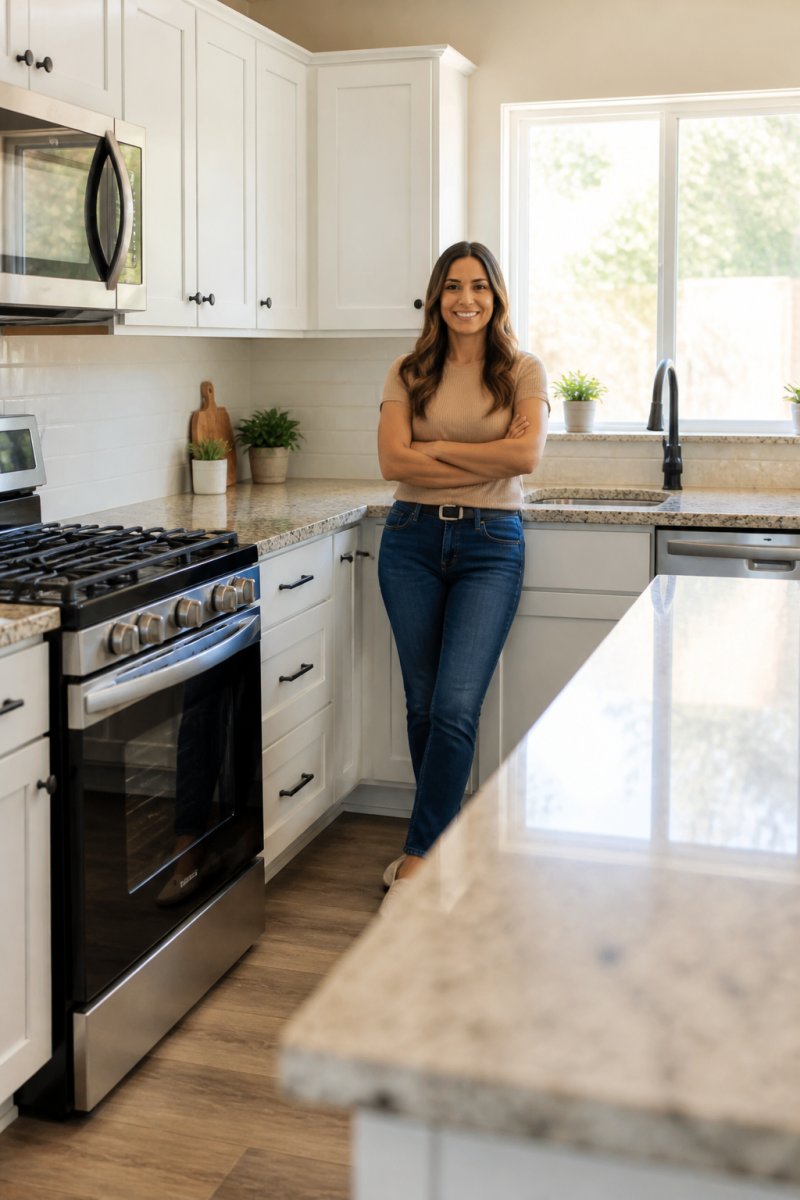
How Home Improvements Affect Automated Valuations, and Why the Algorithm Lags
Home improvements represent one of the largest blind spots in automated valuation models, but not all improvements are treated equally. The algorithm's lag time depends on how quickly new comparable sales with similar upgrades feed into the system, typically 30 to 90 days after a comparable property closes. A homeowner who invested $25,000 in a kitchen renovation may see their Zestimate remain unchanged for months until comparable sales with similar improvements appear in the data.
The key distinction is between improvements the algorithm can infer from public records and those it cannot. Structural upgrades tied to permit records, a new roof, HVAC system, or electrical panel replacement, eventually register because building permits are public data. Cosmetic or functional improvements without permits, like cabinet refacing, countertop replacement, or interior painting, often go unrecognized indefinitely. A $15,000 bathroom remodel that doesn't pull a permit may never be reflected in your Zestimate, even though it genuinely increases buyer appeal and market value.
To manually improve your Zestimate accuracy, use Zillow's "Edit" or "Improve Estimate" feature to add details about recent upgrades. Specifically document:
- Roof age and condition (if replaced within the last 15 years, this carries significant weight)
- HVAC system age (systems under 10 years old are a major selling point)
- Kitchen and bathroom updates (note the year of renovation if known)
- Energy efficiency upgrades (solar panels, new windows, insulation improvements)
- Structural repairs (foundation work, siding replacement, deck additions)
Once you add this information, the algorithm recalculates immediately, but the true test comes when comparable properties with similar improvements sell. If your neighborhood has no recent sales of homes with your specific upgrades, the algorithm may still struggle to assign proper value. This is where a professional agent's comparative market analysis outperforms automation, they can manually adjust for improvements based on actual buyer behavior in your market.
Qualitative Factors the Algorithm Cannot Quantify
Curb appeal, neighborhood safety, and community amenities influence buyer decisions in ways that transcend square footage and lot size. A property on a quiet tree-lined street with a well-maintained park nearby will attract different buyers than an identical home on a busy road. The algorithm struggles to quantify these factors because they're qualitative and often neighborhood-specific.
Market trends also shift faster than the data underlying automated estimates. If your neighborhood is experiencing an influx of young professionals or becoming a hotspot for remote workers, demand and prices may be rising faster than historical data suggests. Conversely, if a major employer is relocating out of the area, prices may soften before that reality fully registers in the sales data. In fast-moving markets, a Zestimate can lag actual conditions by 60 to 120 days.
How to Get an Accurate Home Valuation
To determine whether a Zillow home estimate accurate, the most reliable approach combines multiple valuation methods. Start with the Zillow estimate as a reference point, but don't stop there. Pull a comparative market analysis from a local real estate professional who understands your specific neighborhood and recent market activity. Compare what similar homes have actually sold for in the past 90 days, adjusting for differences in condition and features.
Get a professional appraisal if you're planning to refinance or need a formal valuation for estate planning or tax purposes. The appraisal carries legal weight and provides an independent professional opinion.
When Zillow Estimates Miss the Mark
Automated valuations struggle most in markets with unique properties, limited comparable sales, or rapid change. A custom-built home on five acres in a rural area may have few true comparables, forcing the algorithm to stretch and make assumptions. New construction neighborhoods where sales data is still accumulating produce less reliable estimates. Markets experiencing rapid gentrification or decline often see estimates lag behind actual market conditions.
Frequently Asked Questions
Can I trust Zillow's home value estimate when selling my property?
Zillow home estimates provide a starting point, but they shouldn't be your only reference when pricing a property for sale. The estimate uses public data and an algorithm that may miss recent renovations, local market shifts, or unique property features. For a listing decision, combine the Zestimate with a comparative market analysis from a real estate professional who understands your specific neighborhood and current buyer demand.
How does a CMA vs appraisal differ in accuracy for my home?
A comparative market analysis (CMA) examines recent comparable sales in your area and is typically used for pricing decisions. An appraisal is an official valuation conducted by a licensed appraiser for lending purposes. CMAs are faster and less formal, while appraisals carry legal weight and are more rigorous. Neither is inherently more accurate than the other, they serve different purposes and use different methodologies.
What factors that influence home value does Zillow often overlook?
Zillow's algorithm struggles with recent home improvements, neighborhood-specific trends, property condition details, and hyper-local market volatility. It also cannot assess curb appeal, the quality of a renovation, or emerging changes in your specific block. A professional valuation accounts for these details by physically inspecting the property and analyzing recent sales data with local market expertise.
Should I rely on a Zestimate when deciding whether to sell right now?
A Zestimate can help you gauge general market value, but don't use it alone to decide on timing. Instead, discuss current market trends, inventory levels, and your specific property's strengths with a local real estate professional. They can show you comparable sales data and explain whether conditions favor sellers or buyers in your area right now.