 how-to
How Do You Actually Buy Rural Property in New Mexico?
Last Updated: October 30, 2026
Quick Summary
Buying rural property in new in Mexico means verifying title, boundaries, zoning, legal access, water, and septic before money changes hands. Order a title commitment, compare the survey to the legal description, and confirm well permits and water rights with the state. Get the perc test and utility quotes before removing your feasibility contingency.
- Legal access is the most common deal-killer; a verbal neighbor agreement is not a recorded easement.
- A well permit and a water right are not the same thing, so request both in writing.
- Septic installation typically requires a permit and a site evaluation before approval.
- Price the missing pieces like well, septic, power run, and road improvement when comparing listings.
- Rodney Davis has served Lea County since 2014 through United Realty, LLC and is licensed in New Mexico and Texas.
Table of Contents
- Why Buyers Are Looking at Rural Property in New Mexico
- Rural Land Due Diligence Checklist: What to Verify Before You Commit
- New Mexico Property Access and Easements: Can You Legally Get There?
- New Mexico Well and Water Rights: The Question That Decides the Deal
- New Mexico Septic System Requirements and Buildability
- What Rural Property Costs and What Drives the Price
- Common Mistakes to Avoid When Buying Rural Land
- Send Rodney Your Shortlist Before You Make an Offer
- Frequently Asked Questions
Why Buyers Are Looking at Rural Property in New Mexico
Buying rural property in new in Mexico appeals to people who want space, privacy, and a slower pace without leaving the region they already know.
Southeast New Mexico sits close to the Texas line, so buyers from the Permian Basin can expand into rural acreage without cutting ties to work, family, or familiar suppliers.
The trade-off is real. Before you narrow your search, it helps to look at current listings and local market data for the Lea County cities you are considering.
Rural Land Due Diligence Checklist: What to Verify Before You Commit
Due diligence on rural land means confirming what you are actually buying before money changes hands. A rural land due diligence checklist should cover title, boundaries, zoning, access, water, septic capacity, and hazards.
Start with these steps:
- Order a title commitment and read the exceptions line by line
- Compare the survey to the legal description and the fence lines
- Confirm zoning and permitted land use with the county
- Verify legal access and any recorded easements
- Test or document the water source
A common mistake is treating a title commitment as a formality. It is not. The exceptions schedule tells you what the seller does not own outright, and that is where surprises hide.
Title, Survey, and Boundary Review
Title review confirms the seller has the right to sell and reveals claims against the property. Your title company produces a commitment listing every exception, easement, and recorded encumbrance.
Boundaries are a separate question. A survey shows where the parcel legally sits, and fences do not always match. Ask for the most recent survey and compare it to the legal description in the listing.
Zoning and Permitted Land Use
Zoning decides what you can actually do with the land. A parcel zoned for agricultural use may not allow a second dwelling, a home-based business, or a workshop.
Land use restrictions also come from covenants and deed restrictions, which zoning does not override. Ask for those documents in writing.
Here is the due diligence checklist the article recommends working through before money changes hands.
| Step | What to verify |
|---|---|
| Title | Order a title commitment and read the exceptions line by line |
| Survey | Compare the survey to the legal description and fence lines |
| Zoning | Confirm zoning and permitted land use with the county |
| Access | Verify legal access and any recorded easements |
| Water | Test or document the water source |
| Septic | Confirm septic feasibility with a perc test |
| Hazards | Check floodplain, erosion, and wildfire exposure |
| Walk-through | Walk the parcel with the seller or agent present |
New Mexico Property Access and Easements: Can You Legally Get There?
Legal access is the single most common deal-killer on rural parcels. A property that touches a public road has access.
Ask three questions. Does the parcel front a maintained public road? If not, is there a written easement recorded with the county? Who maintains the road, and at what cost?
Watch out: an unrecorded "gentleman's agreement" for access can disappear when the neighboring parcel sells. Get it in writing and recorded, or walk away.
New Mexico Well and Water Rights: The Question That Decides the Deal
Water availability decides whether rural land is usable, and in New Mexico it is a legal question as much as a physical one.
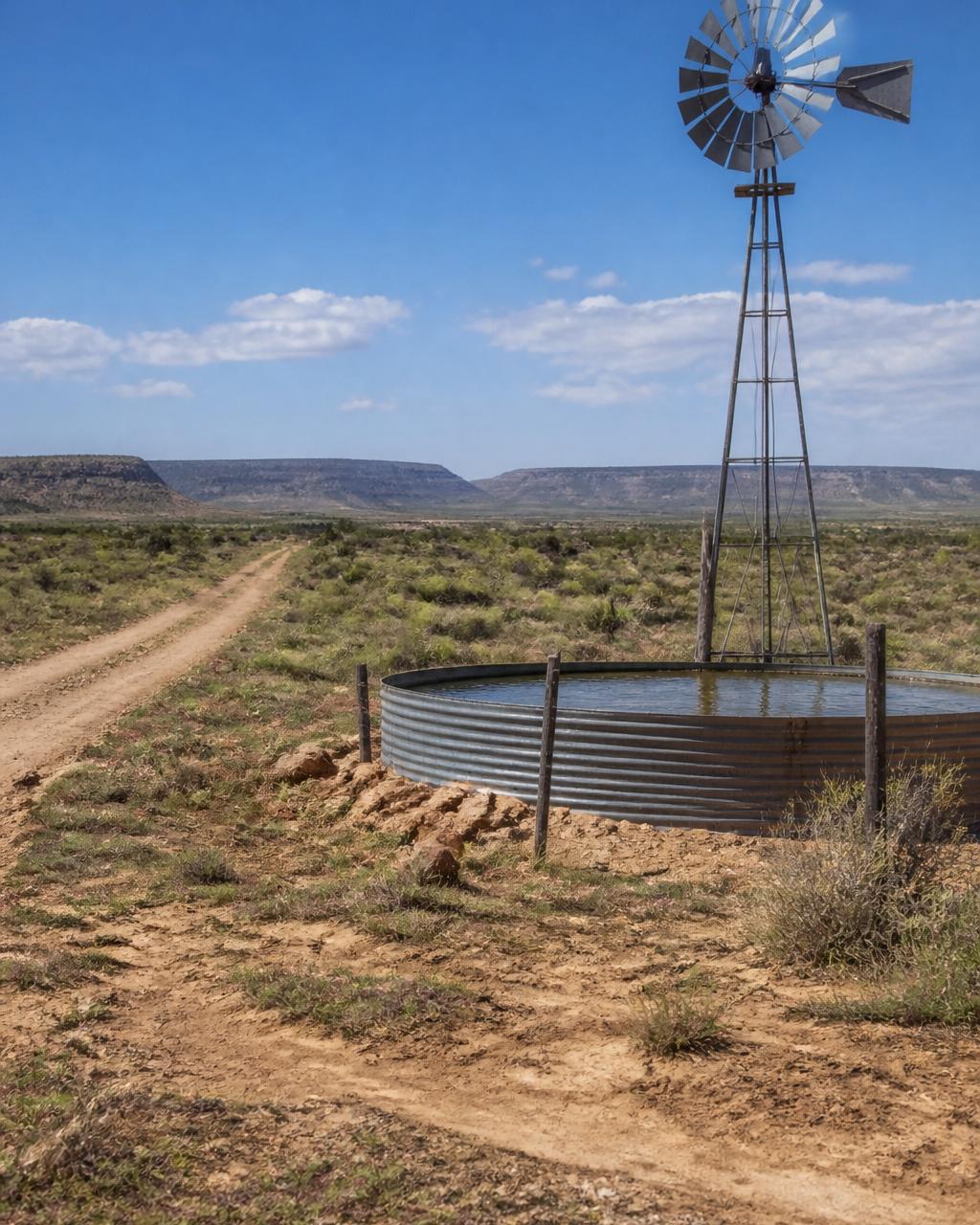
Permit vs. right: what each one actually is
Ask the seller for any well permit and any water right documentation, in writing, and confirm the records for the parcel with the appropriate state agency before you commit.
The documents to request
- Well documentation, such as a driller's report, if one exists
- Well permit number and the date it was issued, if one exists
- Any water right documentation tied to the parcel
- Any notices affecting the parcel's water use
How to verify with the state
Confirm any well permit and water right tied to the parcel's legal description, not just the street address. A right that exists only in a seller's memory is not a right you can rely on.
If there is no well
Get a driller's assessment of expected depth and yield before you commit. A parcel that produced water for a neighbor is not proof yours will. Budget for the well, pump, storage, and any treatment as part of your total cost picture, and confirm with the county whether a new well is allowed on the parcel's zoning.
Hauling and storage
Some parcels rely on hauled water or storage tanks rather than a well. If that is the case, confirm the source, the cost per load, and whether the county allows the storage setup you have in mind. Hauling is a workable arrangement for some buyers, but it changes the ongoing cost and use profile of the land, so price it before you make an offer.
New Mexico Septic System Requirements and Buildability
Septic systems fall under state and county rules, and buildability depends on soil, slope, and access. Septic installation typically requires a permit and a site evaluation before a system is approved, so confirm the requirements with the local authority. Soil that drains poorly, sits in a floodplain, or is too shallow over bedrock limits what you can build, regardless of how the parcel looks from the road.
The buildability checklist
- Perc test and site evaluation from a licensed installer or designer
- Confirmation from the local authority that a system is approvable on the proposed building site
- Setback distances from wells, property lines, and drainages
- Slope and grading feasibility for the building pad and drain field
- Floodplain status from the county or FEMA maps
- Distance and cost to bring electricity to the building site
Utilities: what to confirm before you commit
Electricity is a utility buyers often underestimate. A parcel with a power line at the road may still require a longer service run or other work, and the utility will quote that based on distance and terrain. Ask the serving electric utility for a written estimate to the proposed building site. For internet, check whether fiber, fixed wireless, or satellite is actually available at the parcel, and test cell coverage on site rather than trusting a coverage map.
Septic and well sequencing
Septic and water are linked. Local authorities will want to know where the well sits before approving a drain field, and setback rules protect both. Get the perc test and the well assessment done together so the two systems do not conflict on a small or oddly shaped parcel.
What buildability means for price
A parcel with power at the road, a passing perc test, and a permitted well is worth more than raw acreage with none of those, and the gap is usually larger than buyers expect. When you compare listings, price the missing pieces: well, septic, power run, and road improvement. Those numbers, not the per-acre price alone, tell you what the land will actually cost to use.
What Rural Property Costs and What Drives the Price
When buying rural property in new in Mexico, pricing depends far more on the parcel than on the county average.
Development costs are the hidden half of the budget. Running power, drilling a well, installing septic, and improving a road can each add significant expense, and those numbers vary by distance and terrain.
Confirm the current property tax assessment and any available exemptions with the county assessor before you buy. If you are comparing communities, Maljamar, NM real estate is worth a look.
Common Mistakes to Avoid When Buying Rural Land
The costliest rural buying mistakes are all avoidable. Buyers skip the perc test, accept verbal access, assume a well is permitted, or buy without reading the title exceptions.
Three more worth naming:
- Trusting a listing's acreage without a survey
- Ignoring floodplain and wildfire exposure
- Assuming utilities are closer than they are
If you are purchasing from out of town, the remote-buying process adds its own risks. Our guide on how to buy a home remotely in Hobbs covers the steps for buying when you cannot visit in person.
Send Rodney Your Shortlist Before You Make an Offer
Before you call any agent, know what to ask. Start with 25 questions that matter when choosing a real estate agent, then send Rodney your shortlist.
We are licensed in New Mexico and Texas and have served Lea County since 2014 through United Realty, LLC. Our buyers get an eight-step purchasing process and customizable search alerts for new matches, and we deliver written home valuations in 24 to 48 hours.
Frequently Asked Questions
What should I check before buying rural property in New Mexico?
Start with the four items that kill deals most often: legal access, water, septic feasibility, and zoning. Confirm the parcel has a recorded easement or frontage on a maintained road, not just a gate that looks usable. Ask whether a well exists, whether it is permitted, and whether water rights transfer with the sale. Check with the county about septic approval and permitted land use. Then pull title and a survey so boundaries and encumbrances are documented before you sign anything.
How do I verify legal access to a rural parcel?
Do not rely on a seller's word or a map that shows a road touching the property line. Pull the title commitment and look for recorded easements, then confirm the easement is appurtenant, meaning it runs with the land, and that it is wide enough and maintained enough for year-round use. Ask the county whether the road is public or private. A survey can show whether the legal description matches what is fenced. If access depends on a neighbor's goodwill rather than a recorded document, treat that as a red flag.
Do I need a well and water rights to build on rural land in New Mexico?
In most rural areas, yes. You may need a well permit before drilling, so check with the local authority about the requirements for the parcel. Water rights are separate from the land in many cases, so ask whether any rights are being conveyed in the sale. If the property was previously used for irrigation or livestock, verify that those rights transfer and are properly recorded. A well that exists does not automatically mean the right to use it transfers to you.
What are common mistakes to avoid when buying rural land?
The expensive ones are all due diligence failures. Buying without a recorded easement, assuming a well is usable without a permit check, skipping a septic feasibility test, and trusting a listing's acreage instead of a survey. Another common error is assuming you can subdivide or run a business from the parcel without checking zoning. Finally, budget for the real cost of making the land usable: driveway, utilities, clearing, and site work often exceed what buyers expect. Verify everything in writing before you remove contingencies.
Rural property rewards buyers who verify before they commit. If you want a straight read on a parcel, send Rodney your shortlist and get answers on access, water, and buildability before you make an offer.