 how-to
7 Steps to Commercial Real Estate Investment in Lea County
Last Updated: October 25, 2026
Quick Summary
Commercial real estate investment in Lea County means matching the property to the industries that drive demand here, then valuing it on income rather than emotion. We pull comparable sales, build net operating income from actual leases, and apply a local cap rate before making an offer. Due diligence on zoning, condition, and environmental history protects your capital.
- Industrial demand is cyclical and tracks Permian Basin oilfield activity, not population growth.
- Inventory is thin, so valuation discipline matters more than comparison shopping.
- Value property by dividing net operating income by a market capitalization rate.
- Confirm the yard is zoned for outdoor storage before buying a warehouse.
- Hobbs carries the deepest commercial bench; smaller trade areas lease more slowly.
Table of Contents
- Why Commercial Real Estate Investment in Lea County Is Different
- Commercial Property Types You'll Find Across Lea County
- How to Value Commercial Property Before You Make an Offer
- Commercial Property Investment Due Diligence That Protects Your Capital
- Your Commercial Real Estate Investment Checklist for Lea County
- Pricing, Operating Costs, and Returns: What the Numbers Look Like
- Industries Driving Demand in Hobbs, Lovington, and the Permian Basin
- Ready to Evaluate a Lea County Commercial Property?
- Frequently Asked Questions
Why Commercial Real Estate Investment in Lea County Is Different
Commercial real estate investment in Lea County runs on a different rhythm.
At Rodney Davis - No-Nonsense Realtor, we work deals across Hobbs, Lovington, Eunice, Jal, Tatum, and Maljamar, and the pattern holds: winners know the industries driving demand before the asking price.
Three things make this market distinct:
- Industrial demand is cyclical. Permian Basin activity sets the pace for warehouse and yard space.
- Inventory is thin. Fewer listings means less room to comparison-shop, so valuation discipline matters more.
- Local knowledge beats national data. County-level vacancy and lease rates rarely show up in the big reports.
Below, we walk through the seven-step process we use to evaluate a commercial property here, from property types to due diligence to the numbers behind a deal.
Commercial Property Types You'll Find Across Lea County
Lea County's commercial inventory splits into recognizable categories, each with its own risk profile. Knowing the subtype is the first real decision in any acquisition.
Retail, Office, and Industrial Space
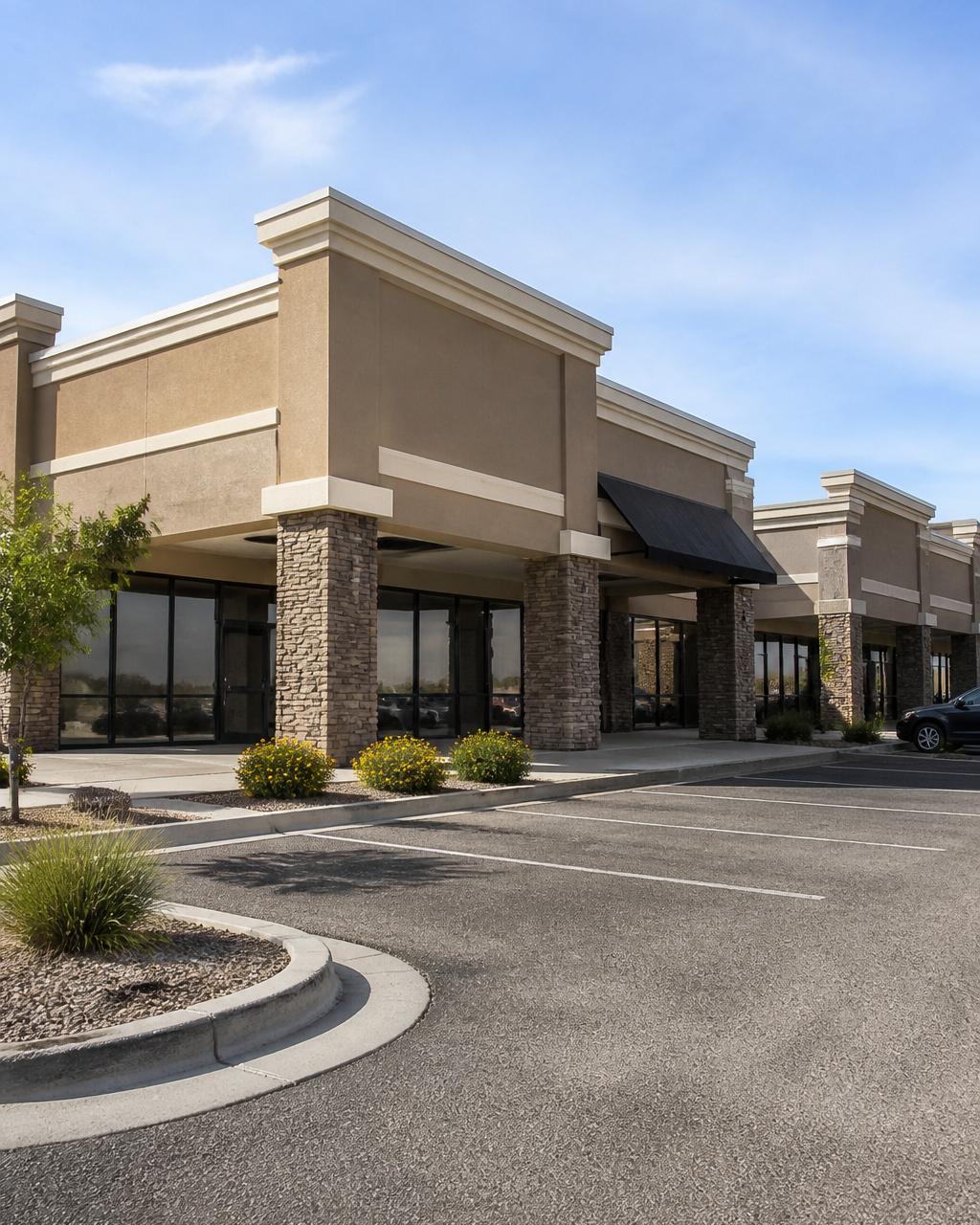
Retail serves a population tied to energy employment, so storefront demand follows the rig count more than tourism. Office tends to be small-format and service-oriented, leased by oilfield service companies, title offices, and medical practices. Industrial covers machine shops, fabrication yards, and service bays supporting drilling and completions.
Warehouse, Vacant Land, and Development Sites
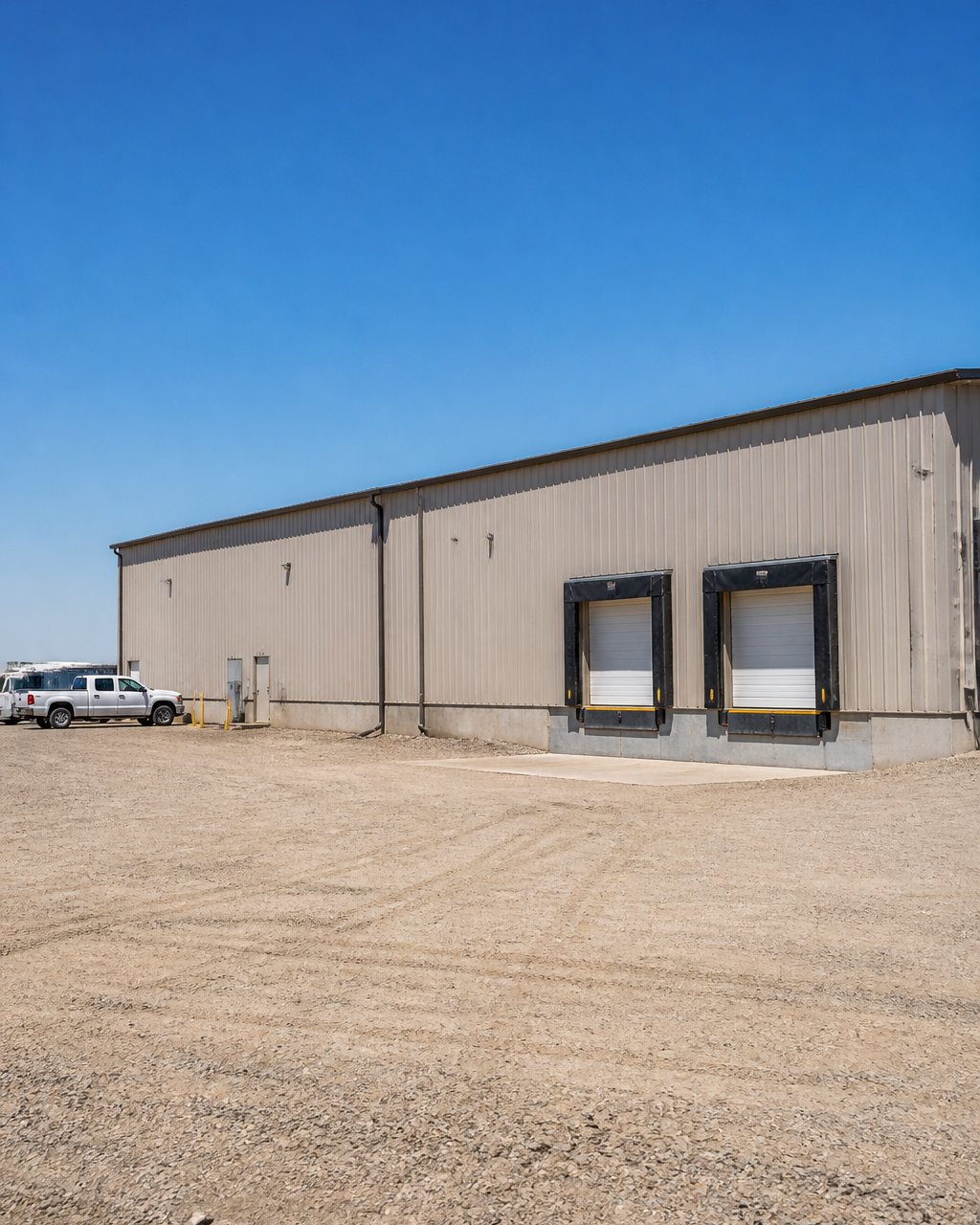
Warehouse is the workhorse of this market: operators need covered storage, laydown yards, and highway access. Vacant and commercial land make up a large share of inventory, and a development site with utilities and zoning in place commands a premium over raw acreage. A fenced yard with a small shop building is a different asset than open land, and tenants treat them differently.
How to Value Commercial Property Before You Make an Offer
Commercial property valuation rests on income, not emotion. The income approach divides net operating income by a market capitalization rate to arrive at an indicated value, a defensible number before you ever negotiate.
Here is how we work through it, in the order that keeps a deal honest:
- Pull comparable sales. Recent prices for similar subtypes set the range. Comps age quickly here because volume is thin, so weight the most recent six to twelve months and note whether each was arm's-length or a related-party transfer.
- Build the income statement. Rental income minus operating expenses equals net operating income. Use actual leases and trailing expenses, not the seller's pro forma. If owner-occupied, impute market rent from comparable leased space.
- Apply a cap rate. Local cap rates for warehouse and retail differ, so match the rate to the asset, tenant credit, and remaining lease term. A single-tenant building with a long lease prices differently than a multi-tenant building with month-to-month occupancy.
- Sanity-check with replacement cost. What would it cost to build this today, land included? In a thin-inventory market, replacement cost often sets the ceiling, because a user can build instead of buy.
- Adjust for condition and access. Condition and highway access move value more than square footage here. A paved, fenced yard with a shop building and highway frontage is a different asset than the same acreage without them.
Reading the Numbers Like a Local
The income approach only works if the inputs are local. Three adjustments separate a defensible valuation from a spreadsheet exercise:
- Vacancy and collection loss. Underwrite vacancy at the submarket level, not a national average. A warehouse near a busy highway corridor and a shop building on a side street in a smaller community do not share the same downtime.
- Operating expenses. Taxes, insurance, utilities, maintenance, and management vary by building age, construction type, and subtype. Underwrite them line by line with actual bills, not a percentage rule of thumb.
- Capital reserves. Roofs, parking lots, and HVAC wear out on a schedule. Set aside a reserve per square foot per year so future repair bills do not surprise you after closing.
What the Numbers Should Tell You
A valuation is a test of whether the deal clears your return threshold. Run the indicated value against the asking price, then stress-test it: what happens to cash flow if one tenant leaves, vacancy rises for two quarters, or a major repair lands in year one? If it only works under best-case assumptions, it does not work.
For a deeper walkthrough of the method, see our guide on how to get an accurate home valuation, which covers the same disciplined approach to arriving at a defensible number. If you're weighing how to bring a professional into the process, our article on hiring a realtor for commercial property explains what to ask before you sign anything.
Commercial Property Investment Due Diligence That Protects Your Capital
Commercial property investment due diligence is where most deals are won or lost. It covers zoning and land use, property condition, environmental history, title, and the lease documents. Skip it and you inherit someone else's problem.
A common mistake is treating due diligence as a paperwork formality. Verify three things yourself:
- Zoning and land use. Confirm the current use is permitted and that a future buyer could use it the same way.
- Property condition. Roof, foundation, utilities, and access all carry repair bills that hit cash flow.
- Environmental history. Oilfield-adjacent land deserves a close look at past use before you commit capital.
Watch out: buying a warehouse without confirming that the yard is properly zoned for outdoor storage can leave you with space a tenant legally cannot use.
Your Commercial Real Estate Investment Checklist for Lea County
A commercial real estate investment checklist keeps the process honest when a deal starts to feel exciting. Use this one before you make any offer.
- Confirm property type and subtype match your strategy
- Review the property listing details and property photos closely
- Pull comparable sales for the same subtype
The checklist is the difference between a deal that cash-flows and one that drains you.
Pricing, Operating Costs, and Returns: What the Numbers Look Like
Every commercial deal comes down to four numbers: sale price, rental income, operating expenses, and the resulting cash flow. Get those right and the return on investment follows.
| Metric | What It Measures | Why It Matters |
|---|---|---|
| Sale price | Acquisition cost | Sets your basis |
| Rental income | Gross revenue | Drives cash flow |
| Operating expenses | Ongoing costs | Eats into NOI |
| Net operating income | Income after expenses | Feeds the cap rate |
| Cap rate | NOI divided by price | Benchmarks value |
| Vacancy rate | Empty space share | Tests income stability |
| Cash flow | Money left after debt service | Pays you |
Occupancy and vacancy rate deserve special attention in a market this cyclical. Full occupancy with long leases is worth more than higher headline rent with constant turnover.
For a read on where local pricing is heading, our real estate market trends guide for Hobbs tracks the movement that shapes both lease rates and sale prices.
Industries Driving Demand in Hobbs, Lovington, and the Permian Basin
Oil and gas anchors demand across the Permian Basin, and every other industry orbits that gravity. Hobbs is the commercial hub, Lovington the county seat, and Eunice, Jal, Tatum, and Maljamar fill out the smaller trade areas. Understanding that hierarchy is the difference between buying space a tenant needs and space a tenant tolerates.
The Demand Hierarchy
Demand does not spread evenly across the county. It concentrates where the supporting infrastructure already exists:
- Hobbs carries the deepest commercial bench. Highway frontage, utility capacity, and a larger labor pool make it the first stop for oilfield service companies, trucking operators, and the professional offices that serve them.
- Lovington functions as the county seat and administrative center, which supports office and service demand tied to government, legal, and medical users rather than heavy industrial use.
- Eunice, Jal, Tatum, and Maljamar are smaller trade areas where demand is narrower and tied to a single employer or stretch of highway. A building that leases quickly in Hobbs can sit much longer in a smaller community, and the reverse is rarely true.
Who Actually Leases Commercial Space Here
The businesses that lease commercial space fall into recognizable groups, and each group wants something different from a building:
- Oilfield service and supply companies need warehouse and yard space, often with room for equipment staging and easy truck access. They value a fenced, paved yard over finished office space.
- Trucking and logistics operators require highway access, turning radius, and laydown area. A site that looks fine on a map can fail on ingress and egress alone.
- Medical, dental, and professional offices want visibility, parking, and a location convenient to the population they serve. They are steadier tenants but more sensitive to building condition and finish.
Reading the Cycle
When energy activity rises, warehouse vacancy tightens and lease rates firm up. When it cools, the same space sits longer and tenants gain leverage. The signals to watch are local, not national: the pace of new permits and drilling activity, the number of service companies expanding or contracting, and how long comparable spaces sit on the market before leasing.
What This Means for an Investor
Match the property to the tenant pool, not the other way around. A building configured for an oilfield service company is worth more to that user than to a retail tenant, and a storefront is worth more to a professional office than to a trucking operator.
To judge where demand is strongest city by city, review the live Lea County real estate data covering median prices and days on market across every community, and check the Hobbs real estate market analysis for the city that anchors most of the basin's commercial activity.
Ready to Evaluate a Lea County Commercial Property?
Commercial real estate investment in Lea County rewards preparation and punishes guesswork. The investors who succeed here know the property types, run the numbers honestly, and complete due diligence before they sign.
That's the work we do. Rodney Davis - No-Nonsense Realtor brings local expertise across every city in Lea County, live MLS listings refreshed multiple times per day, and written valuations delivered in 24-48 hours so you can move on a deal with real numbers in hand.
Get started with Rodney Davis - No-Nonsense Realtor and evaluate your next commercial property with clear, data-driven guidance.
Frequently Asked Questions
What types of commercial property are available in Lea County?
Lea County's commercial inventory covers retail storefronts, office suites, industrial and warehouse space, and vacant land suited for development. Hobbs and Lovington hold most of the retail and office listings, while the surrounding communities and highway corridors carry more industrial and land options. Inventory shifts as oilfield service companies expand or contract, so search filters and email alerts on live MLS listings help you see new commercial property matches as they come up.
What should investors check before buying commercial property?
Work through a commercial real estate investment checklist: zoning and land use, property condition and deferred maintenance, lease terms and occupancy, operating expenses, property taxes, utilities, and access. Pull comparable sales to test the asking price, and confirm what the property actually produces in rental income rather than what the seller projects. A local commercial broker who knows Lea County submarkets can flag issues that a generic inspection misses.
How do local employment trends affect commercial property demand?
Lea County's economy leans heavily on oil and gas, so hiring and layoffs in the Permian Basin move demand for industrial yards, warehouse space, and office suites quickly. When service companies add crews, vacancy rates tighten and lease rates firm up. When activity slows, tenants downsize and landlords compete on terms. Track local employment and permit activity alongside the property's own numbers before you commit capital.
How do you compare commercial properties in different Lea County communities?
Compare on the same metrics across towns: sale price per square foot, lease rate, occupancy, operating expenses, net operating income, and capitalization rate. A retail building in Hobbs and a warehouse in Eunice are not interchangeable, so match the property subtype to the tenant demand in that community. Pull comparable sales from each area and weigh access, utilities, and zoning before deciding which one fits your return on investment target.
Send me a message when you're ready to walk a property and run the numbers together.