 how-to
Steps to Selling a House in Hobbs: 2026 Seller's Guide
Table of Contents
- Your Roadmap: Steps to Selling a House in Hobbs
- How to Price a House for Sale in Lea County
- Preparing a House for Sale: Repairs, Decluttering, and Curb Appeal
- Documents Needed to Sell a House in New Mexico
- Marketing, Showings, and Handling Offers
- How Long It Takes to Sell a House in Hobbs
- Closing, Net Proceeds, and Final Steps to Selling a House in Hobbs
- Frequently Asked Questions
Last Updated: October 18, 2026
Your Roadmap: Steps to Selling a House in Hobbs
Selling a house in Hobbs starts with one decision: price it right, then work the process in order. This guide from Rodney Davis - No-Nonsense Realtor walks you through the full sequence, from valuation to closing day, without the fluff.
Here is the whole path at a glance:
- Choose your selling method: agent, for sale by owner, or cash buyer
- Get a real market value, not a guess
- Set a competitive asking price
- Prepare the property: repairs, decluttering, cleaning, staging
- Gather your New Mexico seller documents
- Market the listing and run showings
- Review offers, negotiate, and handle inspections
- Close, pay off the mortgage, and collect your proceeds
Most sellers skip step one and regret it. The method you pick decides your timeline, your net proceeds, and how much work lands on you.
Below, we break down each stage with the practical details that actually matter in Lea County.
How to Price a House for Sale in Lea County
Pricing a house for sale means matching it to recent comparable sales, not to what you hope it is worth. In Lea County, that means pulling closed sales from the last few months in your neighborhood and adjusting for condition, size, and lot.
The process looks like this:
- Pull comparable sales. Look at homes that closed, not homes that are listed. Listing prices are opinions. Closed prices are facts. Ask for closed sales from the last 90 to 180 days within a few miles of your address, and note whether each comp was a standard sale, a foreclosure, or a distressed sale.
- Adjust for differences. Square footage, age, garage, lot size, and condition all move value. A remodeled kitchen and an original 1970s kitchen are not the same house. Make dollar adjustments line by line rather than eyeballing a single price per square foot.
- Check days on market. Homes that sat for months were priced too high. That tells you where the ceiling is. A useful rule of thumb: if comparable homes are selling quickly, the market is absorbing correctly priced inventory; if they are sitting, buyers are waiting for price cuts.
- Read the local inventory. Ask your agent how many active listings are competing with yours in the same price band and school attendance zone. If you are one of a dozen similar homes, price toward the lower end of the comp range to be the first one shown. If you are the only three-bedroom with a shop on the block, you have more room.
- Get a written valuation. A written home valuation beats an online estimate every time. Automated estimates swing wildly because they never see the inside of your house, and they lag local shifts by months.
That last point matters. If you have looked at online estimates and found them all over the map, you are not imagining it. They are built from public data and algorithms, not from a walkthrough.
The oilfield factor. Lea County employment and household formation rise and fall with drilling and production activity. When rig counts and hiring are strong, buyer traffic and relocation demand pick up; when activity cools, buyers get cautious and days on market stretch.
Property-specific pricing considerations. Homes on well and septic systems, homes with mineral rights severed from the surface estate, and rural properties with acreage or outbuildings are priced differently from in-town tract homes. Buyers and their lenders will ask about water, sewer, access, and easements, and those answers affect value. If your property has any of these features, get them documented before you list so pricing and buyer questions do not stall the sale.
Preparing a House for Sale: Repairs, Decluttering, and Curb Appeal
Preparing a house for sale comes down to three jobs: fix what is broken, clear out what is cluttering, and make the front of the house look cared for. None of these require a full remodel.
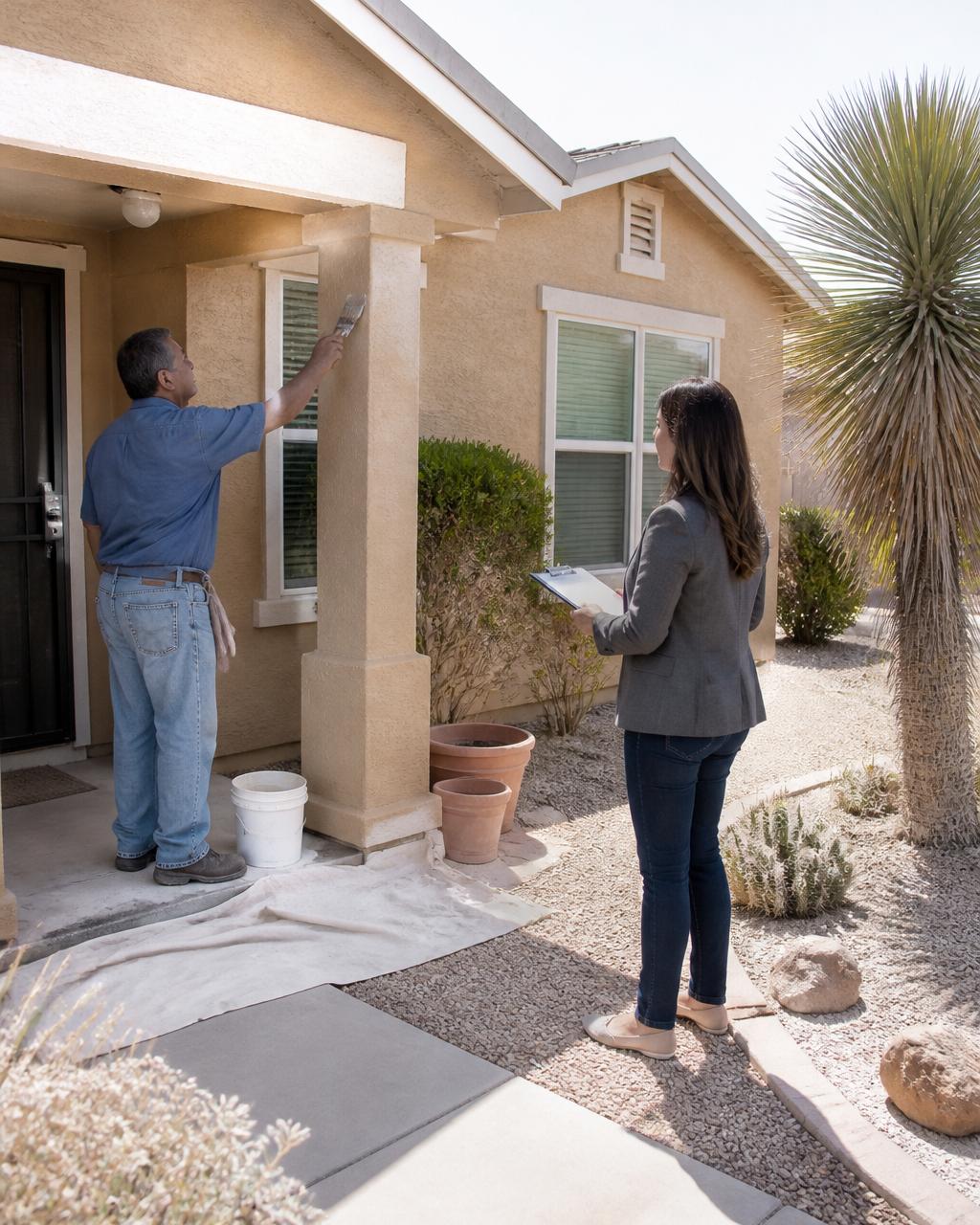
Repairs and improvements. Handle the small stuff first: leaky faucets, sticking doors, cracked outlet covers, burned-out bulbs. Buyers read small defects as signs of bigger problems. Skip the major upgrades unless a specific issue would scare off a buyer or fail an inspection.
Decluttering and cleaning. Clear counters, thin out closets, and remove personal photos. A clean, open house reads bigger and brighter. Deep clean everything, including baseboards and windows.
Home staging and curb appeal. Fresh mulch, a swept walkway, and a clear front porch do more than most sellers expect. Inside, simple staging helps buyers picture themselves living there.
Professional photography. Good photos drive clicks on the property listing. Bad photos kill interest before anyone schedules a showing.
Documents Needed to Sell a House in New Mexico
The documents needed to sell a house in New Mexico start with a seller's property disclosure and a purchase contract, plus title and closing paperwork handled through escrow. New Mexico is a title company state, so a title company, not an attorney, typically runs the closing.
Your paperwork list:
- Seller's property disclosure. A written statement of known defects and material facts about the property.
- Purchase agreement. The contract covering price, closing date, contingencies, and earnest money.
- Lead-based paint disclosure. Required for homes built before 1978.
- Title commitment and title insurance. Ordered through the title company to confirm clear ownership.
- Closing disclosure. The final statement of costs and credits, delivered before closing.
- HOA documents. If the property sits in a homeowners association, provide the rules, dues, and financials.
Rules shift, so confirm current requirements with the New Mexico Regulation and Licensing Department before you sign anything. Get the disclosure right. Leaving out a known defect can come back on you after closing.
Marketing, Showings, and Handling Offers
Marketing a house means getting it in front of buyers through the multiple listing service, professional photos, and steady showings. In a working market like the Permian Basin, the first two weeks of a listing do the heaviest lifting.
What actually drives buyer inquiries:
- A clean, complete property listing with accurate square footage and details
- Strong photos and a clear description of recent updates
- Showings that are easy to schedule, including evenings and weekends
- Fast responses to buyer questions and agent calls
Then come the offers. Read every purchase offer on its full terms, not just the price. A higher price with weak contingencies can be less favorable than a clean, slightly lower offer.
Compare offers on these points:
| What to Check | Why It Matters |
|---|---|
| Price and financing | Cash offers close faster; financed offers depend on appraisal |
| Earnest money | More money down signals a serious buyer |
| Contingencies | Inspection and appraisal contingencies carry risk for you |
| Closing date | Matches your timeline and moving plans |
| Repairs requested | Ask for the inspection report before agreeing to fixes |
Expect a counteroffer round. Negotiation is normal, and an agent can provide guidance on when to hold and when to give.
How Long It Takes to Sell a House in Hobbs
How long it takes to sell a house in Hobbs depends on price, condition, and method. A well-priced home in good shape often draws offers within weeks, while an overpriced one can sit for months.
Here is the realistic timeline:
- Preparation: 1-3 weeks for repairs, cleaning, and photos
- Active listing to accepted offer: weeks for a correctly priced home, longer if it is priced high
- Offer to closing: usually several weeks, depending on financing and appraisal
- Cash sale: often the fastest route, with fewer contingencies to clear
The biggest variable is often your asking price and property condition. Those two can significantly influence days on market. If you need a firm timeline, discuss your target date early to help plan the sale.
Closing, Net Proceeds, and Final Steps to Selling a House in Hobbs
Closing is where the sale becomes real. You sign the closing disclosure, the title company records the transfer of ownership, and the mortgage gets paid off from the sale proceeds.
How the money flows. Your seller proceeds work out like this:
- Sale price
- Minus mortgage payoff and any lien releases
- Minus closing costs and title fees
- Minus agreed repairs or seller credits
- Minus your agent's commission
- Equals your net proceeds
Ask for an itemized seller net sheet before you list. It shows every cost in dollars so there are no surprises at the closing table. Escrow holds the funds, and you get paid once the deed records.
A worked example. Suppose your home sells for $250,000 and you have a $140,000 mortgage balance. A seller-side cost stack might look like this (your actual numbers will vary by contract and lender):
| Line Item | Estimated Amount |
|---|---|
| Contract sale price | $250,000 |
| Mortgage payoff | -$140,000 |
| Agent commission | -$15,000 |
| Title insurance and escrow fees | -$3,000 |
| Recording and transfer fees | -$500 |
| Agreed repairs or seller credit | -$2,500 |
| Estimated net proceeds | $89,000 |
The point of the table is not the exact figures. It illustrates that a sale does not put the full sale price in your pocket, and the gap between gross and net can be significant.
What the title company does. The title company orders a title commitment, searches for liens, judgments, and ownership defects, and issues title insurance for the buyer and, often, an owner's policy for you.
Common closing delays. Financing and appraisal issues are the most frequent causes of a pushed closing date, followed by title defects and repair negotiations after inspection. If your buyer is using a loan, expect the lender to require an appraisal and a clear title before the closing disclosure can be issued.
After closing. Cancel utilities, forward mail, and keep your closing paperwork. It matters at tax time, and it is your record of the sale if questions come up later.
Frequently Asked Questions
What paperwork do I need to sell a house in New Mexico?
New Mexico sellers typically sign a listing agreement, complete a seller's property disclosure form, and provide a lead-based paint disclosure for homes built before 1978. You will also need a title commitment, the purchase contract once an offer is accepted, and a closing disclosure from the title company. If the property is in a homeowners association or has water rights, those documents come into play too. Gathering these early keeps the sale moving and avoids delays at closing.
How do I price my house to sell in Hobbs?
Start with comparable sales, not online estimates. A local agent pulls recent closed sales in your Hobbs neighborhood, adjusts for square footage, condition, and lot size, then compares active listings to set a range. Pricing at or slightly below the top of that range can draw more showings and offers. Overpricing by even a few percent can mean sitting on the market while buyer interest fades, which may lead to a price cut later.
How long does it take to sell a house in Hobbs?
Timeline depends on price, condition, and the season. A well-priced home in good condition can go under contract within a few weeks, while overpriced or as-is properties may sit for months. After you accept an offer, expect roughly 30 to 45 days for inspection, appraisal, and title work before closing. Cash buyers can close faster, sometimes in two to three weeks. Ask your agent for current days-on-market data for your specific neighborhood.
Should I sell my house as-is or make repairs first?
It depends on your buyer pool and your timeline. Minor fixes like fresh paint, leaky faucets, and deep cleaning can help the home show better and reduce buyer objections. Major repairs, like a roof or HVAC replacement, are often handled through price negotiation rather than done upfront. In a market where buyers expect move-in ready homes, a few targeted repairs may shorten your time on market.